Neova continues long-term peat operations and land management in Sweden
Neova has a long-standing presence in Sweden, where its operations are based on regulated production, responsible land management and the use of peat as a raw material in several applications. Peat production in Sweden is strictly regulated under Swedish legislation and is monitored by authorities throughout the entire permit period.
The company’s activities form part of a broader value chain supporting professional horticulture, growing media production, the development of green urban environments, growing media production, biostimulants and energy supply. Peat also supports animal wellbeing, for example through its use in bedding material and animal feed, and contributes to more effective binding of PFAS contaminants through peat-based activated carbon.
Supervised and permit-based operations
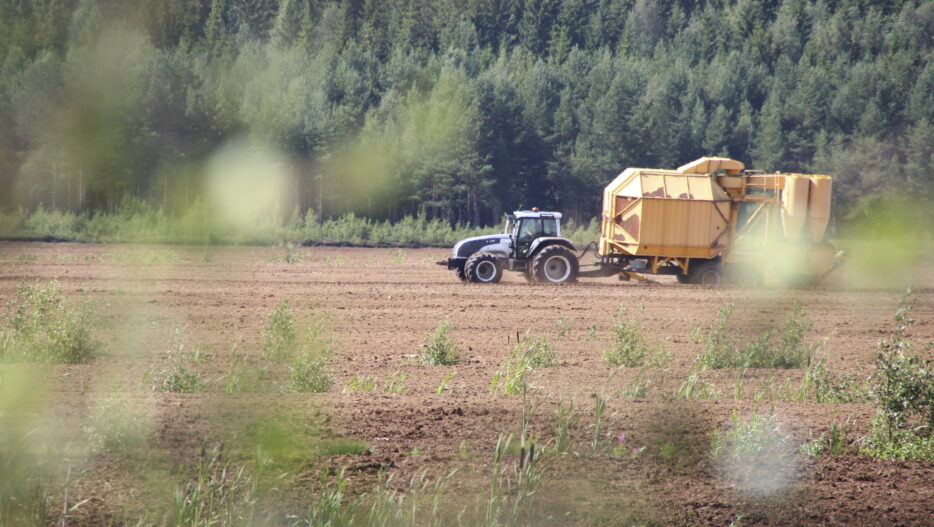
All peat production in Sweden is strictly regulated and subjected to environmental permitting. Peat production takes place only on already drained and impacted peatlands that are no longer in their natural state. There is no risk of significant national or regional nature values being degraded. Operations are overseen by regional supervisory authorities, which ensure that environmental conditions and permit requirements are met.
In Grimsås, Neova applied for a change to its production permit from energy peat to horticultural peat, but the permit modification was not granted. However, peat production itself was not prohibited, and operations continue under the existing permit framework. Neova maintains ongoing dialogue with the authorities and reports any deviations or incidents as required, ensuring that production is carried out in a controlled and transparent manner.
Peat as a raw material for multiple uses
At production sites such as Grimsås, peat is extracted as a raw material for many different uses. To secure access to the raw material in the future, regardless of its end use, including energy use, production areas must be kept open and maintained for this purpose.
All peat produced is handled responsibly and put to beneficial use. Today, peat is used in a broad range of applications, including growing media for professional horticulture, animal bedding, and other products that support essential societal needs.
Environmental management
Environmental management is an integral part of daily operations. Water from production areas is treated through structures such as sedimentation ponds to reduce the risk of discharges to surrounding water systems, where surface drainage systems are also installed.
Maintaining stable operating conditions is essential to ensure that these systems function as intended.
Part of a broader regional transition
Peat-producing regions in Finland and across the EU are undergoing significant structural change as part of the transition towards a low-carbon economy. The use of peat for energy has declined rapidly in recent years, with clear impacts on regional economies and employment.
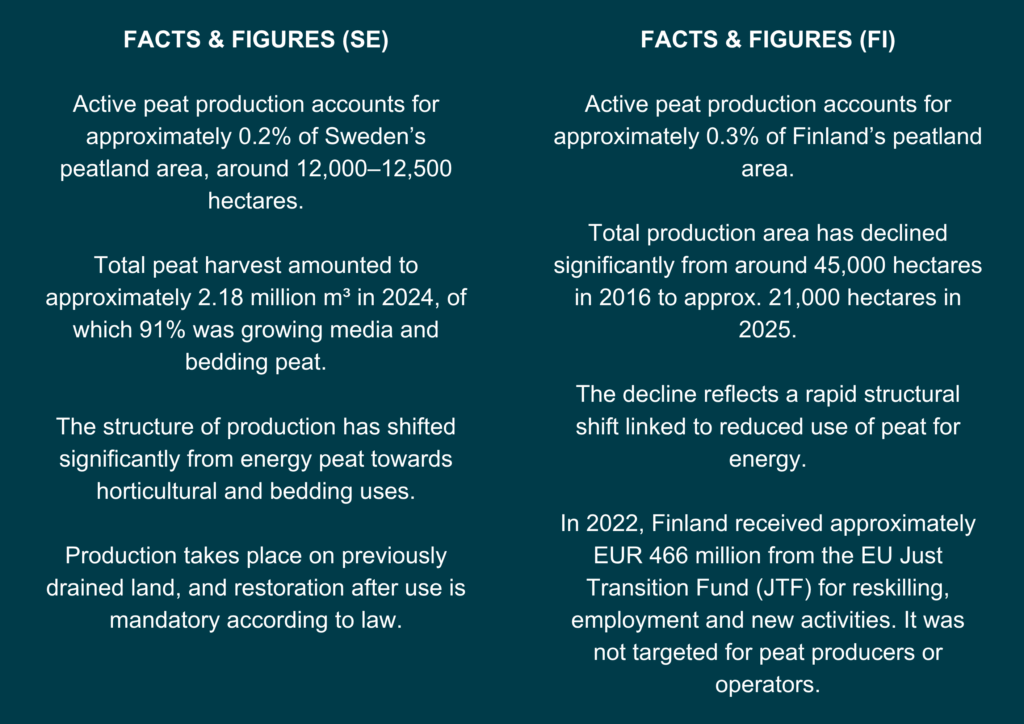
In Finland, active peat production accounts for only around 0.3 per cent of total peatland areas. Production areas have decreased markedly over time, from approximately 45,000 hectares in 2016 to around 21,000 hectares in 2025 across the entire sector.
This rapid decline is the reason why Finland was allocated funding from the EU’s Just Transition Fund. In 2022, Finland received approximately EUR 466 million as part of the EU’s 2021–2027 funding framework. The funding is intended to mitigate the socio-economic impacts of the transition, particularly in regions affected by the reduction in the use of peat for energy.
The funding was not designed to support peat production or individual operators. Instead, it was targeted at regional transition measures, such as reskilling the workforce, supporting employment and enabling new economic activities through projects implemented by public organisations, research institutions and regional development programmes.
Supporting informed discussion
Neova publishes information about its operations to support fact-based public discussion and continues to develop its activities in line with regulatory requirements, market needs and long-term changes in the operating environment.